May 21, 2026
Beyond the Big Names: Building a Realistic College List This Summer
By Peter Young, Founder of My School List
It is that week in late May when the air in the DMV starts to get thick. The local high school parking lots are suddenly a lot emptier. For most families, it is a time for graduation parties and final exams. But for those of you with a rising senior, there is a low hum of anxiety starting up in the background of your daily life.
I know that feeling well. I have spent twenty-three years in education, eight as an elementary teacher and the last fifteen as an elementary and middle school principal. I have helped thousands of families navigate the school system, from the first day of kindergarten to eighth-grade graduation. Now, I am navigating the next step as a parent. My daughter just finished her sophomore year, which means I am exactly one year behind you on this timeline. I am seeing the college process through a parent's eyes, and I am realizing how complicated (and expensive) it has become.
We are entering what I call the "Summer of the List." This is the window where the college search goes from a vague idea to a very real plan. You need to decide where you are actually applying.
The problem is that most families build their college lists based on brand names, where their friends go, or where the sports teams are famous. In our area, that usually means a heavy focus on the big names like UVA, Virginia Tech, or Maryland. Those are great schools. But building a future based on brand recognition alone is a risky move in 2026.
This summer, I want to suggest a "Summer Reset." Instead of following the traditional path of high-stress campus tours, let's look at what the data actually tells us. We want to find a school that fits your student's goals and your family's budget.

The 2026 Reality Check: Why the Math Has Changed
Before we talk about transcripts or essays, we have to talk about the elephant in the room. Starting July 1, 2026, the rules for paying for college change significantly. The One Big Beautiful Bill Act (OBBBA) caps Parent PLUS loans at $20,000 per year, with a $65,000 lifetime limit per student.
For decades, the standard advice was to find the "dream school" first and figure out the money later. Parents could borrow whatever they needed to fill the gap. Those days are over. If a school costs $80,000 a year and your aid package only covers $40,000, you can no longer simply bridge that gap with federal loans.
This change makes your college list more important than ever. You cannot afford a list of schools that you can get into but cannot pay for. This "Summer Reset" is about grounding your emotional list in hard reality.
Step 1: The Transcript Gut-Check
The first thing you should do this summer is a data-driven reality check. Most students have a "gut-feeling" list. It is full of schools they like because of the campus or because a best friend is applying there.
As an educator, I can tell you that the most important piece of data you have is the transcript. It is the story of your student's hard work over the last three years. This summer, instead of just looking at the GPA on the paper, run those numbers through a tool that actually understands what they mean for specific colleges.
At My School List, we built a platform precisely for this. You can upload a transcript and get an immediate analysis. The data might show you that your student is a shoe-in for a school you hadn't considered. It might also show that a "target" school is actually a significant reach.
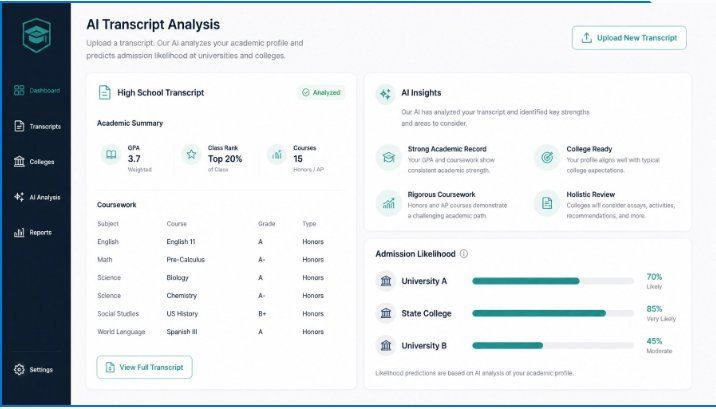
Knowing this now, in June, saves months of heartache in December. It allows you to build a list that is balanced with schools where your student has a genuine, data-backed chance of admission.
Step 2: Stop Guessing at Admission Odds
One of the biggest sources of stress for parents is the mystery of the "Reach" school. We have all heard stories of the student with a perfect GPA who didn't get into an Ivy League school.
The truth is that admissions trends are predictable if you have enough data. Instead of spending your summer wondering "can they get in?", use this time to look at real admission odds.
Our platform uses data from 1,000+ schools to give you a percentage-based look at admission chances. When you see that a school has an 8% admission rate for a student with your child's specific profile, it changes the conversation. It moves from "we hope" to "we need to be realistic."
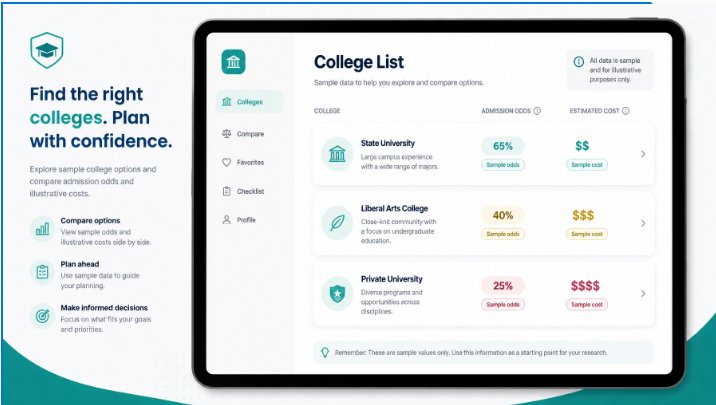
Step 3: Hunt for the Merit Aid Goldmine
Merit aid is the single most under-utilized tool in college planning. This is money that colleges give out based on grades and test scores, not on financial need. In the new world of loan caps, merit aid is no longer a "nice bonus." It is often the only way to make the numbers work.
The problem is that merit aid is notoriously hard to find on college websites. They hide it behind confusing calculators. This summer, your goal should be to identify 3 to 5 schools that are likely to offer your student significant merit aid.
These are often schools that are trying to recruit students from our area. We have a search tool covering 640+ merit aid schools that helps you find these options before you ever fill out an application. Finding a school that will give your student $20,000 a year just for being a good student is the best "summer job" your student could possibly have.
Step 4: The Low-Pressure Essay Draft
I am a big believer in the "rough first draft." In grad school, we learned that the most important thing is just getting words on the page. The Common App essay is a major hurdle that many students wait until October to tackle. By then, they are overwhelmed with senior year classes and sports.
This summer, encourage your student to write one draft. It doesn't have to be good. It just has to exist. The goal isn't to finish the essay: it is to remove the fear of the blank page.
If they get stuck, we offer essay coaching that provides real-time feedback. It is like having a private tutor in the room, helping them find their voice. Getting this out of the way now means the rest of their summer can actually feel like a vacation.
What to Skip: The Anxiety Theater
Now that we have covered what to do, let's talk about what you should actively avoid. There is a whole industry built around making parents feel like they aren't doing enough. I call this "Anxiety Theater."
First, skip the unfocused twenty-campus road trip. Touring twenty schools in two weeks before you have narrowed anything down is a recipe for burnout, and every brick building starts to look the same after the fourth tour. Campus visits genuinely matter, and the summer after junior year is one of your best windows to do them. The fix is to visit smart, not wide. Use your data to narrow the list to five or six schools that are a genuine fit, then go see those.
Second, skip the fixation on reach schools. It is fine to have one or two "long shots" on the list. But if your student's entire summer is focused on a school with a 4% acceptance rate, you are setting everyone up for a stressful winter.
Finally, skip the general panic. You do not need to spend $15,000 on a private college counselor to get your child into a great school. You don't need to spend every weekend at a college fair. You have the tools and the intelligence to navigate this yourself.
One Last Thought, Parent to Parent
As a dad who is watching his own daughter grow up way too fast, I know that this process is about more than just applications. It is about the transition from childhood to adulthood. It is about your student finding a place where they will belong and thrive.
My goal with My School List was to take the mystery out of this process. Every family deserves access to the kind of guidance that used to be reserved for the wealthy. This summer, let's use the data to find that perfect fit. You should spend the rest of the season enjoying these last few months with your child before they head off on their own.
If you are ready to start your "Summer Reset," take our free College Fit Quiz at getmyschoollist.com. It takes five minutes and will give you a much clearer picture of where to start your search.
You've got this. We are here to help.
Related posts




Ready to build your college list?
Take our free College Fit Quiz at getmyschoollist.com/quiz
Take the Free Quiz →